
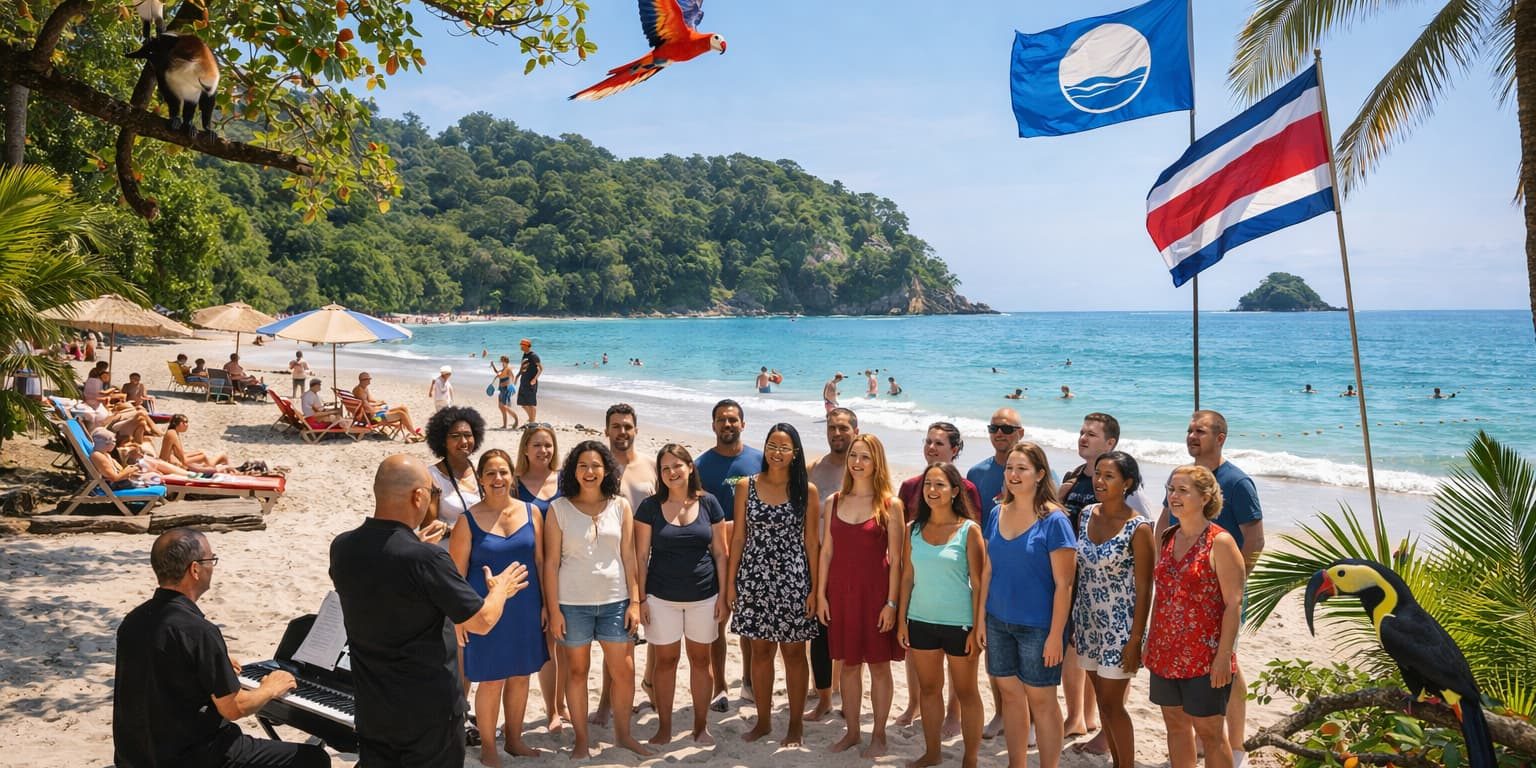
Around the world, music and place are closely connected. Landscapes shape the way people experience sound, culture, and community. In Costa Rica, the region surrounding Manuel Antonio — known for its biodiversity, ocean views, and protected natural spaces — has also become a setting where visiting choirs can reflect on the relationship between music, wellbeing, and community engagement.
Some ensembles travelling in this area choose to combine time in nature with opportunities to share music in rural communities. These experiences highlight the way artistic expression can intersect with everyday life — far from large concert halls or urban centers.
Manuel Antonio: A Landscape that Encourages Reflection
Manuel Antonio is one of Costa Rica’s most recognized natural regions, where rainforest, coastline, and wildlife coexist in close proximity. Visitors often speak about the sense of calm, observation, and connection to nature that the area evokes. For choirs, time spent here can become a moment of pause within a busy travel schedule — a chance to reconnect with themselves, each other, and the meaning behind the music they sing.
The environment naturally invites:
- Quiet listening
- Collective presence
- Attention to breath and sound
- Awareness of surroundings
Many ensembles describe these moments in nature as supportive to both musical focus and general wellbeing. Singing after spending time in such a setting often carries a renewed sense of grounding and calm.
Music Beyond Urban Centers
Alongside visiting natural parks and coastal spaces, some choirs also engage with rural communities in the surrounding regions. These encounters may take the form of informal concerts, collaborative rehearsals, or simple musical sharing in local schools, churches, or cultural halls.
In many rural areas, music remains closely linked to daily life and community identity. Performances are less about grand presentation and more about shared experience. Children, families, elders, and neighbors gather not only to listen, but to participate — whether through singing, movement, or conversation.
For the visiting choir, this often shifts the meaning of performance. Instead of presenting repertoire to a distant audience, the ensemble becomes part of a local moment — where music and community exist together in the same space.
Tourism and Wellbeing in Connection with Music
Travel to places like Manuel Antonio is often associated with rest, nature appreciation, and wellbeing. When music is added to this context, the experience broadens. Singers reflect on how:
- Time in nature influences emotional openness
- Singing supports relaxation and connection
- Cultural contact encourages empathy and understanding
- Shared activity strengthens a sense of belonging
Wellbeing is not only physical — it is social, emotional, and cultural. Choral singing, by its nature, brings people together through listening, breathing, and expressing as a group. When this is combined with the natural environment and human connection found in Costa Rica’s rural regions, the result is often deeply meaningful for participants.
Learning From Rural Costa Rica
Engaging with rural communities also offers visiting musicians the opportunity to learn about local perspectives on culture, education, and community life.
Common observations include:
- A strong sense of collective identity
- Intergenerational participation in activities
- Hospitality as a cultural value
- Music as a tool for celebration and expression
For many singers, these experiences encourage reflection on questions such as:
- What role does music play in building community?
- How does place influence artistic expression?
- How can cultural exchange remain respectful and reciprocal?
- The process becomes one of listening as much as performing.
Ethics of Cultural Interaction
Whenever artistic travel includes community engagement, thoughtful consideration is important. Many programs emphasize:
- Coordination with local educators and leaders
- Acknowledging cultural ownership of traditions
- Ensuring access and participation
- Valuing local voices and knowledge
Approaching music with humility and respect helps maintain balance and mutual benefit. The intention is not to “give” music to a community — but to share in something that already lives there.
Small Moments, Lasting Meaning
The concerts and exchanges that take place in rural Costa Rica are often small in scale. Sometimes the venues are simple, the rehearsals brief, and the audiences intimate. Yet these settings frequently create the kinds of memories that participants remember most vividly.
- A child hearing a choir for the first time.
- A shared rhythm learned together.
- A peaceful walk in the forest before singing.
- A conversation after the concert.
These moments demonstrate that music does not exist separately from life — it grows within it.
The connection between Manuel Antonio’s natural environment, rural community life, and choral music reflects a broader truth: that artistic experience can be deeply intertwined with wellbeing, learning, and human connection.
For choirs, singing in Costa Rica becomes not only a musical activity, but a way to encounter landscape, culture, and community in an open and reflective way. And for local audiences, these encounters add to the ongoing story of how music continues to shape everyday life.
In the quiet spaces between nature and song, something simple — yet profoundly human — takes place.